If You Were a Polygon Read Aloud
I t'due south important for people to tell yous what side they are on and why, and whether they might be biased. A annunciation of members' interests, of a sort. And then, I am going to be talking to you near reading. I'm going to tell you that libraries are important. I'm going to propose that reading fiction, that reading for pleasure, is one of the most important things ane tin do. I'm going to brand an impassioned plea for people to understand what libraries and librarians are, and to preserve both of these things.
And I am biased, obviously and enormously: I'm an author, ofttimes an author of fiction. I write for children and for adults. For about 30 years I accept been earning my living through my words, more often than not by making things upwards and writing them downwardly. Information technology is obviously in my interest for people to read, for them to read fiction, for libraries and librarians to be and aid foster a honey of reading and places in which reading can occur.
So I'thou biased as a author. But I am much, much more biased every bit a reader. And I am fifty-fifty more biased as a British denizen.
And I'm here giving this talk this night, nether the auspices of the Reading Agency: a clemency whose mission is to give everyone an equal chance in life by helping people become confident and enthusiastic readers. Which supports literacy programs, and libraries and individuals and nakedly and wantonly encourages the deed of reading. Considering, they tell usa, everything changes when nosotros read.
And it'due south that change, and that act of reading that I'm here to talk about this evening. I want to talk nigh what reading does. What information technology's good for.
I was once in New York, and I listened to a talk about the building of individual prisons – a huge growth industry in America. The prison industry needs to plan its future growth – how many cells are they going to demand? How many prisoners are there going to be, 15 years from now? And they plant they could predict it very hands, using a pretty unproblematic algorithm, based on request what percentage of 10 and 11-year-olds couldn't read. And certainly couldn't read for pleasure.
It'due south not 1 to one: you tin't say that a literate gild has no criminality. But there are very real correlations.
And I remember some of those correlations, the simplest, come up from something very simple. Literate people read fiction.
Fiction has ii uses. Firstly, it'southward a gateway drug to reading. The drive to know what happens side by side, to want to turn the page, the demand to keep going, even if information technology's difficult, considering someone's in problem and yous have to know how it's all going to terminate … that's a very existent drive. And it forces yous to learn new words, to think new thoughts, to keep going. To discover that reading per se is pleasurable. Once yous learn that, yous're on the road to reading everything. And reading is central. There were noises made briefly, a few years ago, about the idea that nosotros were living in a post-literate globe, in which the ability to make sense out of written words was somehow redundant, only those days are gone: words are more important than they ever were: nosotros navigate the earth with words, and as the world slips onto the web, we need to follow, to communicate and to comprehend what we are reading. People who cannot understand each other cannot exchange ideas, cannot communicate, and translation programs simply go so far.
The simplest way to brand sure that nosotros raise literate children is to teach them to read, and to prove them that reading is a pleasurable activity. And that means, at its simplest, finding books that they relish, giving them access to those books, and letting them read them.
I don't recollect there is such a matter as a bad book for children. Every at present and again information technology becomes fashionable among some adults to point at a subset of children's books, a genre, perhaps, or an author, and to declare them bad books, books that children should exist stopped from reading. I've seen information technology happen over and over; Enid Blyton was declared a bad author, so was RL Stine, so were dozens of others. Comics have been decried as fostering illiteracy.
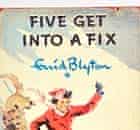
It'south tosh. It's snobbery and it's foolishness. At that place are no bad authors for children, that children like and desire to read and seek out, because every child is different. They tin can find the stories they need to, and they bring themselves to stories. A hackneyed, worn-out idea isn't hackneyed and worn out to them. This is the commencement time the child has encountered it. Do non discourage children from reading because you experience they are reading the wrong matter. Fiction you do not like is a route to other books you may prefer. And not everyone has the same gustatory modality equally yous.
Well-meaning adults can easily destroy a kid's love of reading: stop them reading what they enjoy, or give them worthy-just-slow books that y'all like, the 21st-century equivalents of Victorian "improving" literature. You'll air current upwards with a generation convinced that reading is uncool and worse, unpleasant.
We need our children to get onto the reading ladder: annihilation that they enjoy reading will move them up, rung by rung, into literacy. (Also, do not do what this writer did when his 11-year-quondam daughter was into RL Stine, which is to go and get a re-create of Stephen King's Carrie, saying if you lot liked those you'll love this! Holly read nothing but safe stories of settlers on prairies for the rest of her teenage years, and nonetheless glares at me when Stephen King'due south name is mentioned.)
And the 2nd matter fiction does is to build empathy. When you watch TV or see a flick, you are looking at things happening to other people. Prose fiction is something you build upwards from 26 letters and a handful of punctuation marks, and you, and you lone, using your imagination, create a world and people it and look out through other eyes. You get to experience things, visit places and worlds y'all would never otherwise know. You learn that anybody else out in that location is a me, besides. You're beingness someone else, and when you render to your own world, you're going to exist slightly changed.
Empathy is a tool for building people into groups, for allowing us to function as more than than self-obsessed individuals.
You're also finding out something as you read vitally important for making your way in the world. And information technology'south this:
The world doesn't have to exist similar this. Things can be different.
I was in China in 2007, at the first party-canonical science fiction and fantasy convention in Chinese history. And at 1 point I took a top official aside and asked him Why? SF had been disapproved of for a long time. What had changed?
It's simple, he told me. The Chinese were brilliant at making things if other people brought them the plans. Just they did non introduce and they did non invent. They did non imagine. Then they sent a delegation to the US, to Apple, to Microsoft, to Google, and they asked the people there who were inventing the futurity nigh themselves. And they found that all of them had read scientific discipline fiction when they were boys or girls.
Fiction tin prove y'all a different world. Information technology tin can have yous somewhere you've never been. In one case yous've visited other worlds, like those who ate fairy fruit, you can never exist entirely content with the earth that y'all grew up in. Discontent is a good affair: discontented people can change and improve their worlds, leave them improve, get out them different.
And while we're on the subject area, I'd like to say a few words about escapism. I hear the term bandied about as if it's a bad thing. As if "escapist" fiction is a inexpensive opiate used past the muddled and the foolish and the deluded, and the only fiction that is worthy, for adults or for children, is mimetic fiction, mirroring the worst of the world the reader finds herself in.
If yous were trapped in an incommunicable situation, in an unpleasant identify, with people who meant you ill, and someone offered yous a temporary escape, why wouldn't yous take it? And escapist fiction is just that: fiction that opens a door, shows the sunlight exterior, gives you lot a place to become where yous are in control, are with people you want to be with(and books are real places, brand no mistake about that); and more importantly, during your escape, books can also give you noesis near the world and your predicament, requite you weapons, give you armour: existent things you can take back into your prison. Skills and cognition and tools you tin can use to escape for existent.
Equally JRR Tolkien reminded us, the only people who inveigh against escape are jailers.
Another style to destroy a child's dearest of reading, of course, is to make sure in that location are no books of any kind around. And to requite them nowhere to read those books. I was lucky. I had an fantabulous local library growing up. I had the kind of parents who could exist persuaded to drop me off in the library on their mode to work in summertime holidays, and the kind of librarians who did non heed a pocket-size, unaccompanied boy heading back into the children's library every morn and working his way through the card catalogue, looking for books with ghosts or magic or rockets in them, looking for vampires or detectives or witches or wonders. And when I had finished reading the children's' library I began on the adult books.
They were skilful librarians. They liked books and they liked the books being read. They taught me how to gild books from other libraries on inter-library loans. They had no snobbery nigh anything I read. They but seemed to like that there was this wide-eyed little boy who loved to read, and would talk to me about the books I was reading, they would find me other books in a serial, they would help. They treated me every bit another reader – zero less or more than – which meant they treated me with respect. I was non used to existence treated with respect as an 8-twelvemonth-old.
But libraries are almost freedom. Freedom to read, freedom of ideas, freedom of communication. They are about education (which is non a process that finishes the day nosotros leave schoolhouse or university), about entertainment, almost making safe spaces, and nearly access to data.
I worry that here in the 21st century people misunderstand what libraries are and the purpose of them. If you perceive a library equally a shelf of books, it may seem antiquated or outdated in a world in which nigh, but not all, books in print exist digitally. Simply that is to miss the betoken fundamentally.
I call up it has to do with nature of data. Information has value, and the right information has enormous value. For all of homo history, nosotros take lived in a time of information scarcity, and having the needed information was always important, and e'er worth something: when to institute crops, where to find things, maps and histories and stories – they were always good for a repast and company. Data was a valuable thing, and those who had information technology or could obtain it could charge for that service.
In the last few years, nosotros've moved from an data-scarce economic system to one driven past an information overabundance. According to Eric Schmidt of Google, every two days now the human race creates as much data equally nosotros did from the dawn of civilisation until 2003. That's most five exobytes of information a mean solar day, for those of yous keeping score. The challenge becomes, non finding that scarce plant growing in the desert, simply finding a specific plant growing in a jungle. We are going to need help navigating that information to notice the thing we actually demand.
Libraries are places that people become to for information. Books are but the tip of the information iceberg: they are there, and libraries tin can provide yous freely and legally with books. More children are borrowing books from libraries than ever earlier – books of all kinds: newspaper and digital and sound. But libraries are also, for case, places that people, who may not take computers, who may non have internet connections, can get online without paying anything: hugely important when the way you find out about jobs, apply for jobs or apply for benefits is increasingly migrating exclusively online. Librarians can help these people navigate that earth.
I do not believe that all books will or should migrate onto screens: as Douglas Adams once pointed out to me, more than xx years before the Kindle turned up, a physical book is like a shark. Sharks are old: there were sharks in the body of water before the dinosaurs. And the reason there are all the same sharks effectually is that sharks are improve at existence sharks than anything else is. Physical books are tough, hard to destroy, bathroom-resistant, solar-operated, feel good in your hand: they are good at being books, and in that location will always be a place for them. They belong in libraries, simply every bit libraries have already become places yous can go to get admission to ebooks, and audiobooks and DVDs and web content.
A library is a place that is a repository of data and gives every citizen equal access to information technology. That includes wellness information. And mental health information. It's a customs infinite. Information technology's a place of prophylactic, a haven from the world. It's a identify with librarians in it. What the libraries of the future volition be like is something nosotros should be imagining now.
Literacy is more important than e'er it was, in this globe of text and electronic mail, a earth of written data. We need to read and write, we need global citizens who can read comfortably, comprehend what they are reading, sympathize nuance, and make themselves understood.
Libraries actually are the gates to the hereafter. So it is unfortunate that, round the world, we observe local authorities seizing the opportunity to close libraries equally an easy way to save money, without realising that they are stealing from the future to pay for today. They are endmost the gates that should be open.
According to a recent report by the Organisation for Economic Cooperation and Development, England is the "only state where the oldest age group has college proficiency in both literacy and numeracy than the youngest group, afterwards other factors, such as gender, socio-economical backgrounds and type of occupations are taken into business relationship".
Or to put it some other way, our children and our grandchildren are less literate and less numerate than we are. They are less able to navigate the world, to sympathize it to solve problems. They can be more easily lied to and misled, will be less able to modify the globe in which they find themselves, exist less employable. All of these things. And every bit a state, England volition fall backside other developed nations because it will lack a skilled workforce.
Books are the way that nosotros communicate with the expressionless. The way that we learn lessons from those who are no longer with united states, that humanity has built on itself, progressed, made knowledge incremental rather than something that has to exist relearned, over and over. In that location are tales that are older than almost countries, tales that take long outlasted the cultures and the buildings in which they were first told.
I call up we accept responsibilities to the future. Responsibilities and obligations to children, to the adults those children will become, to the world they will detect themselves inhabiting. All of us – as readers, equally writers, as citizens – have obligations. I idea I'd try and spell out some of these obligations hither.
I believe we have an obligation to read for pleasance, in individual and in public places. If we read for pleasure, if others see us reading, then we learn, we exercise our imaginations. We evidence others that reading is a good thing.
We have an obligation to support libraries. To use libraries, to encourage others to use libraries, to protest the closure of libraries. If y'all do not value libraries then you practice not value information or culture or wisdom. You are silencing the voices of the past and you are dissentious the futurity.
We take an obligation to read aloud to our children. To read them things they enjoy. To read to them stories we are already tired of. To do the voices, to make it interesting, and not to stop reading to them just because they learn to read to themselves. Use reading-aloud time as bonding time, as fourth dimension when no phones are existence checked, when the distractions of the world are put bated.
We accept an obligation to apply the language. To button ourselves: to discover out what words hateful and how to deploy them, to communicate clearly, to say what nosotros mean. We must not to effort to freeze language, or to pretend it is a dead matter that must exist revered, simply we should employ information technology equally a living affair, that flows, that borrows words, that allows meanings and pronunciations to modify with time.
We writers – and especially writers for children, merely all writers – have an obligation to our readers: it'southward the obligation to write true things, peculiarly important when we are creating tales of people who do not exist in places that never were – to empathise that truth is not in what happens just what it tells us about who we are. Fiction is the lie that tells the truth, after all. Nosotros have an obligation not to bore our readers, merely to make them demand to turn the pages. Ane of the best cures for a reluctant reader, afterward all, is a tale they cannot stop themselves from reading. And while we must tell our readers truthful things and requite them weapons and give them armour and laissez passer on whatever wisdom we have gleaned from our brusk stay on this green world, we have an obligation not to preach, not to lecture, non to force predigested morals and messages down our readers' throats like developed birds feeding their babies pre-masticated maggots; and we have an obligation never, always, nether any circumstances, to write annihilation for children that we would not want to read ourselves.
We accept an obligation to empathise and to acknowledge that as writers for children we are doing important work, considering if we mess information technology upwards and write tiresome books that turn children away from reading and from books, nosotros 've lessened our own futurity and macerated theirs.
Nosotros all – adults and children, writers and readers – have an obligation to daydream. We have an obligation to imagine. It is like shooting fish in a barrel to pretend that nobody tin can alter anything, that we are in a world in which guild is huge and the individual is less than nothing: an atom in a wall, a grain of rice in a rice field. Just the truth is, individuals change their earth over and over, individuals make the time to come, and they practice it by imagining that things tin can be dissimilar.
Wait effectually you lot: I hateful information technology. Pause, for a moment and look around the room that you are in. I'k going to point out something so obvious that information technology tends to be forgotten. It's this: that everything you can see, including the walls, was, at some point, imagined. Someone decided it was easier to sit on a chair than on the ground and imagined the chair. Someone had to imagine a style that I could talk to you lot in London correct now without us all getting rained on.This room and the things in it, and all the other things in this building, this city, exist because, over and over and over, people imagined things.
We take an obligation to make things beautiful. Not to leave the earth uglier than we found information technology, non to empty the oceans, not to get out our problems for the adjacent generation. Nosotros have an obligation to clean up after ourselves, and non leave our children with a world nosotros've shortsightedly messed up, shortchanged, and crippled.
We have an obligation to tell our politicians what we want, to vote against politicians of whatever political party who do non understand the value of reading in creating worthwhile citizens, who do not want to human activity to preserve and protect cognition and encourage literacy. This is not a matter of party politics. This is a affair of common humanity.
Albert Einstein was asked once how nosotros could make our children intelligent. His reply was both simple and wise. "If you lot want your children to be intelligent," he said, "read them fairy tales. If y'all want them to exist more intelligent, read them more fairy tales." He understood the value of reading, and of imagining. I hope nosotros can give our children a earth in which they will read, and be read to, and imagine, and empathize.
davidsonweent1999.blogspot.com
Source: https://www.theguardian.com/books/2013/oct/15/neil-gaiman-future-libraries-reading-daydreaming

Post a Comment for "If You Were a Polygon Read Aloud"